Character Creation For Video Games With J Hill Download UPDATED
Character Creation For Video Games With J Hill Download
| Silent Hill | |
|---|---|
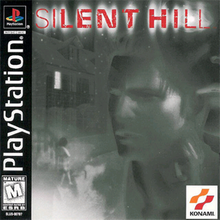 North American cover art | |
| Developer(south) | Team Silent[a] |
| Publisher(s) | Konami |
| Director(s) | Keiichiro Toyama |
| Producer(due south) | Gozo Kitao |
| Programmer(s) | Akihiro Imamura |
| Writer(s) | Keiichiro Toyama |
| Composer(s) | Akira Yamaoka |
| Series | Silent Hill |
| Platform(s) |
|
| Release | PlayStation
|
| Genre(s) | Survival horror,[b] visual novel[c] |
| Mode(s) | Single-player |
Silent Hill [d] is a 1999 survival horror game adult by Team Silent, a group in Konami Computer Entertainment Tokyo, and published by Konami. The first installment in the Silent Colina series, the game was released from February to July, originally for the PlayStation. Silent Colina uses a third-person view, with existent-time rendering of 3D environments. To mitigate limitations of the panel hardware, developers liberally used fog and darkness to muddle the graphics. Unlike before survival horror games that focused on protagonists with gainsay training, the actor character of Silent Hill is an "everyman".[1]
The game follows Harry Stonemason equally he searches for his missing adopted daughter in the eponymous fictional American town of Silent Hill; stumbling upon a cult conducting a ritual to revive a deity it worships, he discovers her true origin. 5 game endings are possible, depending on actions taken by the role player, including ane joke catastrophe.
Silent Hill received positive reviews from critics on its release and was commercially successful. It is considered by many to exist ane of the greatest video games ever fabricated, as well as a defining championship in the survival horror genre, as information technology moved away from B movie horror elements toward a more psychological horror fashion, emphasizing atmosphere.[1] Various adaptations of Silent Hill have been released, including a 2001 visual novel, the 2006 feature motion-picture show Silent Hill, and a 2009 reimagining of the game, titled Silent Hill: Shattered Memories. The game was followed by Silent Hill 2 in 2001, and a direct sequel, Silent Loma 3, in 2003.
Gameplay [edit]

Harry'south flashlight is the sole light source for the bulk of the game.[2]
The objective of the player is to guide primary protagonist and player character Harry Mason through a monster-filled town as he searches for his lost daughter, Cheryl. Silent Hill 'south gameplay consists of gainsay, exploration, and puzzle-solving.[3] The game uses a 3rd-person view, with the camera occasionally switching to other angles for dramatic effect, in pre-scripted areas. This is a change from older survival horror games, which constantly shifted through a variety of camera angles. Considering Silent Hill has no heads-upward brandish, the histrion must consult a separate menu to bank check Harry's "health".[4] If a DualShock controller is used, a eye shell rhythm can exist felt signifying that the histrion is at low wellness.
Harry confronts monsters in each area with both melee weapons and firearms. An ordinary man, Harry cannot sustain many blows from enemies, and gasps for breath later on sprinting.[2] His inexperience in handling firearms means that his aim, and therefore the player's targeting of enemies, is frequently unsteady.[5] A portable radio collected early in the game alerts Harry to the presence of nearby creatures with bursts of static.[two]
The actor tin locate and collect maps of each area, stylistically similar to tourist maps. Accessible from the menu and readable only when sufficient light is present, each map is marked with places of interest. Visibility is generally low due to fog[three] and darkness; the latter is prevalent in the "Otherworld".[vi] The role player locates a minor flashlight early in the game, just the light beam illuminates only a few anxiety.[two] Navigating through Silent Hill requires the histrion to find keys and solve puzzles.[iii]
Plot [edit]
Silent Loma opens with Harry Stonemason'due south drive to the titular town with his adopted girl Cheryl for a vacation. At the town'south edge, he swerves to avoid striking a girl in the road, and as a consequence, he crashes and loses consciousness.[5] Waking up in town, he realizes that Cheryl is missing and sets out to wait for her. The town is deserted and foggy, with snow falling out of flavor, and he begins to feel bouts of unconsciousness and encounters with hostile creatures. During his exploration of the town, he meets Cybil Bennett, a police officer from the neighboring town who is investigating the mysterious occurrences. Dahlia Gillespie, a cultist, gifts him the Flauros, a amuse which she claims tin can counteract the darkness spreading through the town. In the town's hospital, he encounters its managing director, Dr. Michael Kaufmann, bewildered past the sudden changes in the town, and discovers a frightened, amnesiac nurse, Lisa Garland, hiding in i of the rooms.[seven] [8] [9] [x]
Harry tin can later rescue Kaufmann from a monster, discover show of Kaufmann'due south function in the local drug trafficking, and stumble upon Kaufmann'due south subconscious bottle of aglaophotis, a supernatural liquid that can exorcise demons.[11] Harry comes to believe that a darkness is transforming the town into someone's nightmare, which is why the inhabitants have by and large disappeared. Dahlia urges him to end "the demon" responsible for information technology—the girl in the road who appears to him sporadically—or Cheryl volition die.[12] Continuing his search, Harry finds himself drawn into a fight with Cybil, who has become the host to a supernatural parasite; the histrion can choose to save her.[13] The next time Harry sees the girl, the Flauros activates and neutralizes her telekinetic powers. Dahlia then appears and reveals that she manipulated Harry into catching the girl—an bogeyman of her girl, Alessa.
Harry then awakens in the hospital again, next to Lisa. Lisa explains that she experienced a sense of deja vu while in the basement, and when he finds her over again, she despairs that she is "the same as them". She pleads with Harry to relieve her, and claret runs down her face up; horrified, he flees. Her diary reveals that she nursed Alessa during a secret, forced hospitalization. Alessa's never-healing wounds terrified her, as she fell deeper into a drug habit fueled by Kaufmann.[14] Finding Dahlia with Alessa'southward defeated apparition and charred trunk, Harry demands to know Cheryl's whereabouts: he discovers that seven years earlier, Dahlia conducted a ritual to force Alessa to nascence the cult's deity; Alessa survived beingness immolated because her status equally vessel rendered her immortal, while her mental resistance to the ritual caused her soul to exist bisected, preventing the nascence. I half manifested every bit the babe Cheryl, whom Harry and his wife adopted. Dahlia then casts a spell to lure Cheryl dorsum, while Alessa was imprisoned within the hospital, indelible unceasing agony equally a result of her injuries. With Alessa'due south program thwarted and her soul rejoined, the deity is revived and possesses her.[15] [16]
Endings [edit]
4 different endings are bachelor, dependent on the player'south previous actions:
- In the "Bad" ending, the deity merges with Alessa and electrocutes Dahlia earlier attacking Harry. He defeats it, and Cheryl's vocalism thank you him for freeing her. Overcome by grief, Harry collapses, and the side by side scene is that of his corpse in his wrecked car.
- The "Bad +" ending concludes with Harry and Cybil fleeing instead later the deity's demise.
- In the "Expert" ending, Kaufmann, at present feeling betrayed by Dahlia, demands that she restore the town to normal and uses aglaophotis to exorcise the deity out of Alessa. Harry defeats the deity, and Alessa gives him an babe, the reincarnation of herself and Cheryl. She then helps him escape from her nightmare realm.
- In the "Good +" ending, Harry escapes with Cybil and the baby. In both "Practiced" endings, a bloody and vengeful Lisa prevents Kaufmann from escaping with Harry.[13]
- The "Joke" catastrophe features extraterrestrials abducting Harry.[17]
Evolution [edit]
Design [edit]
Development of Silent Loma started in September 1996.[18] The game was created past Team Silent, a group of staff members within the Konami Computer Entertainment Tokyo studio.[19] [xx] [21] Konami sought to produce a game that would be successful in the The states. For this reason, a Hollywood-like atmosphere was used for Silent Hill. The staff members that were assigned to the game'due south development had failed at their previous projects. They intended to go out Konami, every bit they were not allowed to realize their own ideas, and were not compatible with the company's other teams. Co-ordinate to composer Akira Yamaoka, the developers did non know how to proceed with the Silent Colina project, either. Equally the fourth dimension passed, the personnel and management of Konami lost their faith in the game, and the members of Team Silent increasingly felt like outsiders. Despite the profit-oriented approach of the parent visitor, all the same, the developers of Silent Hill had much artistic freedom because the game was still produced as in the era of lower-budget 2nd titles. Eventually, the development staff decided to ignore the limits of Konami's initial programme, and to make Silent Loma a game that would appeal to the emotions of players instead.[22]
For this purpose, the team introduced a "fear of the unknown" as a psychological type of horror. The plot was made vague and occasionally contradictory to go out its true meaning in the dark, and to brand players reflect upon unexplained parts.[22] Director Keiichiro Toyama created the game'southward scenario,[23] while developer Hiroyuki Owaku wrote the text for the riddles.[24] [25] Toyama did non have much feel of horror movies simply was interested in UFOs, the occult and David Lynch movies which influenced the game'south development.[26] Toyama questioned Konami's decision to appoint him as manager, as he had never been 1 prior to Silent Hill.[27]
The localization company Latina International translated the script into English.[25] [28] The boondocks of Silent Colina is an estimation of a small American customs as imagined by the Japanese team. It was based on Western literature and films, besides as on depictions of American towns in European and Russian culture.[22] The game'south joke ending came out of a suggestion box created to find alternative reasons for the occurrences in Silent Loma.[29]
Artist Takayoshi Sato corrected inconsistencies in the plot, and designed the game'southward cast of characters.[29] As a young employee, Sato was initially restricted to basic tasks such as font design and file sorting. He also created 3D demos and presentations, and taught older staff members the fundamentals of 3D modeling. However, he was not credited for this work equally he did not have as much respect inside Konami as older employees. Sato eventually approached the company's higher-ups with a short demo motion picture he had rendered, and threatened to withhold this technical knowledge from other staff members if he was not assigned to 3D work. As a upshot, his superior had to give in to his need, and he was allowed to do graphic symbol designs.[30] Instead of relying on illustrations, Sato conceived the characters of Silent Hill while creating their computer-generated models.[eighteen] [22] He gave each their ain distinctive characteristics, merely made Harry nigh completely neutral as he wanted to avoid forcing interpretations of the game on the players.[22] [29] Creating the skull shapes for the faces of the American cast was hard because he had no Caucasian co-workers to utilise for reference.[29] Although Sato was largely responsible for the game's cinematics and characters at this signal, his superior still did non want to fully credit his piece of work, and intended to assign a visual supervisor to him. To prevent this from happening, Sato volunteered to create the total-motion videos of Silent Hill by himself.[xxx] Over the grade of 2 and a half years, he lived in the development team'southward office, as he had to render the scenes with the approximately 150 Unix-based computers of his coworkers afterwards they left work at the end of a 24-hour interval.[eighteen] [xxx]
Sato estimated the game's upkeep was lower than the cost of Nihon's biggest games at the fourth dimension. He said the development squad intended to brand Silent Hill a masterpiece rather than a traditional sales-oriented game, and that they opted for an engaging story, which would persist over time – similar to successful literature.[22] The game debuted at the 1998 Electronic Entertainment Expo in Atlanta, Georgia, U.s.a., where the presentations of movies and in-game scenes garnered applause from the audience.[30] [31] This favorable reception persuaded Konami to allot more personnel and public relation initiatives to the project.[22] Konami later showcased Silent Loma at the European Computer Trade Evidence in London,[32] and included a demo with its stealth game Metal Gear Solid in Nippon.[33]
The names and designs of some Silent Hill creatures and puzzles are based on books enjoyed past the graphic symbol of Alessa, including The Lost World by Arthur Conan Doyle and Lewis Carroll's Alice's Adventures in Wonderland.[34] [35] The game contains several existent-life references, particularly in characters' names. Cheryl Mason's first name is based on actress Sheryl Lee's first name, and Lisa Garland's surname is taken from actress Judy Garland.[seven] "Michael Kaufmann" is a combination of Troma Studios producers Michael Herz's and Lloyd Kaufmann's outset name and surname, respectively. Alessa'southward original name was "Asia", and Dahlia's was "Daria", based on the start names of actresses Asia Argento and Daria Nicolodi – Argento'southward mother.[36] Harry's proper noun was originally "Humbert", and Cheryl'due south was "Dolores", in reference to the protagonist and title character of Vladimir Nabokov's novel Lolita. The American staff altered these names, as they considered them likewise uncommon.[seven] Fictitious religious items appearing in the game have used diverse religions as a basis: the evil spirit-dispelling substance Aglaophotis, which is said to be fabricated from a medicinal herb, is based on a herb of similar name and nature in the Kabbalah (Jewish mysticism); the "Seal of Metatron" (also referred to by Dahlia as the "Mark of Samael") references the angels Metatron and Samael, respectively; and the proper noun of the "Flauros" was taken from the eponymous demon appearing in the Lemegeton, a book on magic said to have been compiled by writings of King Solomon.[37] Certain items and doors in the "nowhere" dimension of the game were given names based on occult elements in order to symbolize magical traits of Dahlia. The names of these doors were taken from the names of the angels Ophiel, Hagith, Phaleg, and Bethor, who appear in a medieval book of black magic and are supposed to rule over planets. This motif of giving names that suggest planets was used to signify that "a deeper role of the realm of Alessa's mind is being entered", according to Owaku.[35]
Music [edit]

Akira Yamaoka requested to compose the soundtrack for Silent Hill after the original musician decided to go out the development team.[38]
The soundtrack for Silent Hill was equanimous past sound manager Akira Yamaoka, who requested to join the development staff after the original musician had left.[38] In addition to the music, he was in charge of tasks such as sound event creation and audio mastering.[38] [25] [39] Yamaoka did not watch game scenes, merely created the music independently from its visuals. The manner of his compositions was influenced by Twin Peaks composer Angelo Badalamenti.[forty] To differentiate Silent Hill from other games equally much as possible, and to give information technology a cold and rusty feel, Yamaoka opted for industrial music.[38] When he presented his musical pieces to the other staff members for the first time, they misinterpreted their sound as a game bug. Yamaoka had to explain that this dissonance was intended for the music, and the team only withdrew their initial objection after he elaborated on his reasons for choosing this mode.[22]
On March 5, 1999, the album Silent Hill Original Soundtracks was released in Japan. The 41st track on the CD, the ending theme "Esperándote", was composed by Rika Muranaka. Afterward Yamaoka had approached her to create a piece of music for the game, she suggested the use of bandoneóns, violins, and a Spanish-speaking singer. It was decided to brand the song a tango, and Muranaka composed the melody for the English lyrics she had conceived.[39] When she arrived in Buenos Aires, Argentina, to tape the translated Castilian lyrics with Argentine singer Vanesa Quiroz, Muranaka realized that the syllables did not match the melodic line whatever more, and she had to recompose information technology in v minutes.[25] [39]
On October 29, 2013, Perseverance Records released a "Best Of" album, which features 16 newly interpreted instrumental tracks composed by Akira Yamaoka and bundled and performed past Edgar Rothermich.[41] The 17th rail on the anthology is the carol "I Want Dearest" performed by Romina Arena.
Release [edit]
Silent Loma was released for the PlayStation in North America on February 23, 1999,[42] [43] in Japan on March iv, 1999[44] and in Europe on July xvi, 1999.[45] [46] It was included in the Japanese Silent Hill Consummate Set in 2006.[47] On March 19, 2009, Silent Loma became available for download from the European PlayStation Network store of the PlayStation 3 and the PlayStation Portable.[48] Two days later, the game was removed due to "unforeseen circumstances".[49] On September 10, 2009, Silent Hill was released on the N American PlayStation Network.[50] On Oct 26, 2011, information technology was re-released on the European PlayStation Network.[51]
Adaptations [edit]
A radically contradistinct version of Silent Hill was released for the Game Male child Advance. Titled Play Novel: Silent Hill and released merely in Japan in 2001, it is a gamebook-manner visual novel. It contains a retelling of Silent Loma 's story through text-based gameplay, with the player occasionally confronted with questions apropos what management to take the grapheme, as well as the puzzles, which are a major part of Silent Colina 'due south gameplay. After completing the game once, the player has the option of playing as Cybil in a second scenario, with a third fabricated available for download as a Paid-DLC on the Mobile Adapter GB[east] device, once the second scenario has been completed.[52] When the game was exhibited, Western critics were unimpressed, and criticized the lack of any soundtrack as severely detracting from the "horror" factor of the game.[52] [53]
A pic adaptation, also titled Silent Hill, was released on Apr 21, 2006. The film, directed past Christophe Gans, was based largely but loosely on the game, incorporating elements from Silent Colina 2, 3, and 4.[54] [55] Gans replaced Harry Mason with a female main protagonist, Rose Da Silva, because he felt Harry had many qualities typically perceived as feminine.[56] When designing the film's visual elements, Gans was influenced past fellow directors Michael Mann, David Lynch, and David Cronenberg.[57] The motion-picture show'due south soundtrack includes music composed by Yamaoka.[58] Although critical reaction was mostly negative, the motion-picture show was a financial success and was praised by fans, peculiarly for its visuals.[59] [threescore]
A "reimagining" of Silent Loma, titled Silent Loma: Shattered Memories, was adult by Climax Studios and published by Konami Digital Entertainment. The game was released on December 8, 2009, for the Wii and on January 19, 2010, for the PlayStation two and the PlayStation Portable, to mostly positive reviews.[61] Although it retains the premise of a man's search for his missing girl, Shattered Memories branches off into a different plot with contradistinct characters.[62] Information technology features psychological profiling which alters various in-game elements depending on the player's response to questions in therapy,[62] lacks the gainsay of Silent Hill, and replaces the "Otherworld" with a series of chase sequences through an alternate frozen version of the town.[62]
Reception and legacy [edit]
Silent Hill received "generally favorable reviews" at the review aggregate website Metacritic.[63] The game sold over two million copies,[18] which gained Silent Hill a place in the American PlayStation Greatest Hits budget releases.[72] In November 1999, the Verband der Unterhaltungssoftware Federal republic of germany (VUD) gave Silent Hill a "Gold" award,[73] indicating sales of at least 100,000 units across Germany, Austria and Switzerland.[74]
Silent Hill has been compared to the Resident Evil series of survival horror video games. Bobba Fatt of GamePro labeled Silent Loma a "shameless merely slick Resident Evil clone",[four] while Edge described information technology every bit "a near-perfect sim nightmare".[65] Others felt that Silent Loma was Konami's answer to the Resident Evil series[5] in that, while they noted a similarity, Silent Hill utilized a dissimilar grade of horror to induce fear, attempting to form a disturbing temper for the actor, in contrast to the visceral scares and action-oriented arroyo of Resident Evil.[3] Calculation to the atmosphere was the sound, which was well-received; Baton Matjiunis of TVG described the ambient music as "engrossing";[75] a reviewer for Game Revolution also praised the audio, commenting that the audio and music "will fix you on edge".[iii] AllGame editor Michael Fifty. House praised Silent Loma, describing it as "a truly magnificent work of fine art" and "a genuinely terrifying experience combined with a unique, gripping story and immersive atmosphere".[64] Less well-received was the vocalism acting which, although some reviewers remarked information technology was better than that constitute in the Resident Evil serial,[4] was found poor overall by reviewers, and accompanied by pauses between lines that served to spoil the atmosphere.[3] [4]
Reviewers noted that Silent Hill used real-time 3D environments, in contrast to the pre-rendered environments found in Resident Evil. Fog and darkness were heavily used to disguise the limitations of the hardware.[two] [4] Along with the grainy textures - also from hardware limitations[2] [v]- most reviewers felt that these factors actually worked in the game'southward favor; Francesca Reyes of IGN described it as "adding to the atmosphere of dilapidation and disuse".[5] In using 3D environments, however, controls became an event, and in "tougher" areas, maneuverability became "an exercise in frustration".[5]
Edge selected it equally runner-up for the Gameplay Innovation accolade. They stated that, whereas other "games attempt to hide the PlayStation'south visual inadequecies," Konami "uses its describe-altitude deficiency to chilling outcome past draping atmospheric fog about the place."[71]
The game's popularity as the first in the series was further recognized long after its release; a list of the best PS games of all time past IGN in 2000 listed it as the 14th-best PS game,[76] while a 2005 article by GameSpy detailing the best PS games listed Silent Hill every bit the 15th-best game produced for the console.[31] A GameTrailers video feature in 2006 ranked Silent Hill as number ane in its list of the top ten scariest games of all time.[77] In 2005, the game was credited for moving the survival horror genre away from B picture horror elements to the psychological style seen in art house or Japanese horror films,[78] due to the game's emphasis on a agonizing atmosphere rather than visceral horror.[three] In November 2012, Time named information technology one of the 100 greatest video games of all fourth dimension.[79]
Notes [edit]
- ^ Team Silent was a grouping in Konami Computer Amusement Tokyo.
- ^ PlayStation version.
- ^ Game Male child Accelerate version.
- ^ Japanese: サイレントヒル, Hepburn: Sairento Hiru
- ^ Japanese: モバイルアダプタGB, Hepburn: Mobairu Adaputa Jī Bī
References [edit]
- ^ a b Fahs, Travis. "IGN Presents the History of Survival Horror". IGN. IGN Entertainment, Inc. p. v. Archived from the original on June 29, 2010. Retrieved December 30, 2010.
- ^ a b c d e f k Fielder, Joe (February 23, 1999). "Silent Hill Review for PlayStation". GameSpot. CBS Interactive Inc. Archived from the original on October 17, 2007. Retrieved January 5, 2011.
- ^ a b c d e f g h Baldric (March 1, 1999). "Silent Hill Review for the PS". Game Revolution. AtomicOnline, LLC. Archived from the original on May 9, 2008. Retrieved November 5, 2008.
- ^ a b c d east f Fatt, Bobba (November 24, 2000). "Silent Hill Review". GamePro. GamePro Media, Inc. Archived from the original on December 27, 2008. Retrieved November five, 2008.
- ^ a b c d eastward f g Reyes, Francesca (February 24, 1999). "Silent Loma – PlayStation Review". IGN. IGN Entertainment, Inc. Archived from the original on September 29, 2008. Retrieved November 5, 2008.
- ^ Konami Computer Entertainment Tokyo, Inc (January 31, 1999). Silent Hill (PlayStation). Konami of America, Inc.
Harry: It's not me. This whole boondocks... information technology'due south beingness invaded by the Otherworld. A world of someone's nightmarish delusions come to life. Little by little, the invasion is spreading. Trying to eat upwards everything in darkness. I think I'm finally beginning to understand what that lady was talking well-nigh.
- ^ a b c "Silent Hill Grapheme Commentary". Silent Hill 3 公式完全攻略ガイド/失われた記憶 サイレントヒル・クロニクル [Silent Hill three Official Strategy Guide / Lost Memories: Silent Hill Relate] (in Japanese). NTT Publishing Co., Ltd. July 31, 2003. p. 24. ISBN4-7571-8145-0.
- ^ Konami Computer Entertainment Tokyo, Inc (January 31, 1999). Silent Hill (PlayStation). Konami of America, Inc. Level/area: Cafe 5 to ii.
- ^ Konami Computer Entertainment Tokyo, Inc (Jan 31, 1999). Silent Hill (PlayStation). Konami of America, Inc. Level/area: Beginning/North Bachman Road.
- ^ Konami Reckoner Amusement Tokyo, Inc (January 31, 1999). Silent Hill (PlayStation). Konami of America, Inc. Level/area: Alchemilla Infirmary.
- ^ Konami Calculator Amusement Tokyo, Inc (Jan 31, 1999). Silent Loma (PlayStation). Konami of America, Inc. Level/area: Annie's Bar, Norman's Cabin.
- ^ Konami Computer Entertainment Tokyo, Inc (January 31, 1999). Silent Colina (PlayStation). Konami of America, Inc. Level/area: Lake View Pier Boat.
- ^ a b "Silent Colina Catastrophe Analysis". Silent Loma 3 公式完全攻略ガイド/失われた記憶 サイレントヒル・クロニクル [Silent Hill 3 Official Strategy Guide / Lost Memories: Silent Hill Chronicle] (in Japanese). NTT Publishing Co., Ltd. July 31, 2003. pp. 28–29. ISBNfour-7571-8145-0.
- ^ Konami Computer Entertainment Tokyo, Inc (Jan 31, 1999). Silent Hill (PlayStation). Konami of America, Inc. Level/area: Alchemilla Infirmary (Nowhere).
- ^ "Silent Hill Series – Characters Relation Map". Silent Loma 3 公式完全攻略ガイド/失われた記憶 サイレントヒル・クロニクル [Silent Hill 3 Official Strategy Guide / Lost Memories: Silent Hill Chronicle] (in Japanese). NTT Publishing Co., Ltd. July 31, 2003. pp. 10–11. ISBN4-7571-8145-0.
- ^ Konami Estimator Entertainment Tokyo, Inc (Jan 31, 1999). Silent Colina (PlayStation). Konami of America, Inc. Level/surface area: Nowhere.
- ^ Konami Computer Amusement Tokyo, Inc (January 31, 1999). Silent Hill (PlayStation). Konami of America, Inc. Level/surface area: UFO Ending.
- ^ a b c d Sato, Takayoshi. "My Resume". SatoWorks. Archived from the original on July sixteen, 2011. Retrieved January 6, 2011.
- ^ ゲームソフト プレイステーション (in Japanese). Konami Calculator Amusement Tokyo, Inc. Archived from the original on October 12, 2004.
- ^ "E3 2001: Silent Hill 2 Interview". IGN. IGN Entertainment, Inc. May 17, 2001. Archived from the original on May 25, 2011. Retrieved December 26, 2010.
- ^ "IGN Top 100 Games 2007 – 97: Silent Colina 2". IGN. IGN Entertainment, Inc. 2007. Archived from the original on June sixteen, 2010. Retrieved Dec 26, 2010.
- ^ a b c d e f m h Villner, Pär (March 2008). "Mörkerseende". Level (in Swedish). Reset Media AB (23): 85–93.
- ^ クリエイターズファイル 第127回 (in Japanese). Gpara.com. November four, 2003. Archived from the original on September 30, 2011. Retrieved April 28, 2011.
- ^ Ito, Masahiro (June fourteen, 2010). "Nobu bulletin board system: scenario writers". GMO Media, Inc. Archived from the original on July 16, 2011. Retrieved June 14, 2010.
The first SILENT HILL is Keiichiro Toyama'southward original scenario. But Hiroyuki Owaku had charge of that riddle part.
- ^ a b c d Konami Estimator Entertainment Tokyo, Inc (January 31, 1999). Silent Loma. Konami of America, Inc. Scene: staff credits.
- ^ "Archived re-create". Polygon. Archived from the original on August 14, 2016. Retrieved June 12, 2016.
{{cite web}}: CS1 maint: archived re-create as title (link) - ^ Toyama, Keiichiro. "Silent Colina". Twitter. Archived from the original on February 21, 2019. Retrieved February nineteen, 2018.
- ^ 制作物 (in Japanese). Latina International Corporation. Archived from the original on May 14, 2011. Retrieved May 14, 2011.
- ^ a b c d Dieubussy (May 15, 2009). "Interview with Takayoshi Sato: Seizing New Creations". Core Gamers. Archived from the original on August 31, 2011. Retrieved Jan 6, 2011.
- ^ a b c d Sheffield, Brandon (Baronial 25, 2005). "Silence Is Gold: Takayoshi Sato's Occidental Journey". Gamasutra. United Business organization Media LLC. Archived from the original on May 12, 2011. Retrieved May thirteen, 2011.
- ^ a b Williams, Bryn; Vasconcellos, Eduardo (September vii, 2005). "Summit 25 PSone Games of All-Time". GameSpy. IGN Entertainment, Inc. Archived from the original on June 24, 2007. Retrieved July 8, 2007.
- ^ "ECTS: Konami Gears Up". IGN. IGN Amusement, Inc. September viii, 1998. Archived from the original on September 1, 2007. Retrieved November 23, 2008.
- ^ "Metal Gear to Arrive Demo-less". IGN. IGN Entertainment, Inc. September 4, 1998. Archived from the original on February 9, 2007. Retrieved Baronial ten, 2010.
- ^ "Silent Hill Creature Commentary". Silent Hill 3 公式完全攻略ガイド/失われた記憶 サイレントヒル・クロニクル [Silent Hill 3 Official Strategy Guide / Lost Memories: Silent Hill Chronicle] (in Japanese). NTT Publishing Co., Ltd. July 31, 2003. pp. 26–27. ISBNiv-7571-8145-0.
- ^ a b "XVII: The Star – Motif". Silent Hill 3 公式完全攻略ガイド/失われた記憶 サイレントヒル・クロニクル [Silent Hill 3 Official Strategy Guide / Lost Memories: Silent Hill Chronicle] (in Japanese). NTT Publishing Co., Ltd. July 31, 2003. pp. 106–107. ISBN4-7571-8145-0.
- ^ "Silent Hill Graphic symbol Commentary". Silent Hill 3 公式完全攻略ガイド/失われた記憶 サイレントヒル・クロニクル [Silent Hill iii Official Strategy Guide / Lost Memories: Silent Colina Relate] (in Japanese). NTT Publishing Co., Ltd. July 31, 2003. p. 25. ISBNfour-7571-8145-0.
- ^ "V: The Hierophant - Key Items". Silent Colina three 公式完全攻略ガイド/失われた記憶 サイレントヒル・クロニクル [Silent Hill 3 Official Strategy Guide / Lost Memories: Silent Loma Relate] (in Japanese). NTT Publishing Co., Ltd. July 31, 2003. p. 91. ISBNfour-7571-8145-0.
- ^ a b c d Kalabakov, Daniel (July 16, 2002). "Interview with Akira Yamaoka". Spelmusik.net. Archived from the original on June 29, 2007. Retrieved May 13, 2011.
- ^ a b c Silent Hill Original Soundtracks (Media notes). Konami Co., Ltd. 1999. KICA-7950.
- ^ "Archived copy". Archived from the original on October 26, 2014. Retrieved October 26, 2014.
{{cite web}}: CS1 maint: archived re-create as title (link) - ^ "Archived copy". Archived from the original on August 8, 2014. Retrieved July 23, 2014.
{{cite spider web}}: CS1 maint: archived copy as title (link) - ^ "KONAMI OF AMERICA INTRODUCES GAMERS TO TERROR-FILLED TOWN OF SILENT Colina". Konami. Archived from the original on October 1, 1999. Retrieved Oct 24, 2019.
- ^ http://psx.ign.com: Silent Hill Surprise
- ^ "サイレントヒル | ソフトウェアカタログ | プレイステーション® オフィシャルサイト". Archived from the original on May 6, 2007. Retrieved January 31, 2021.
- ^ Computer and Video Games issue 213 (August 1999), p.48-49, quote: "16th July: Silent Loma - Complicated horror story screams and kicks its fashion into the shops today."
- ^ Ad Archived Nov 8, 2021, at the Wayback Car placed in French magazine Game On, issue 2 (July 1999), which reads (in French): "Silent Hill - Quand même la mort n'est plus une issue _ 16.07.1999", confirms July xvi, 1999, as the official release appointment.
- ^ Fricke, Nicholas (August 3, 2006). "A look inside the Silent Loma Complete set". Siliconera. Archived from the original on Apr 30, 2010. Retrieved December 29, 2010.
- ^ Plunkett, Luke (March 20, 2009). "PAL PlayStation Store Update: Silent Hill!". Kotaku. Gawker Media. Archived from the original on June xv, 2011. Retrieved December 25, 2010.
- ^ "Official PlayStation Community". Sony Computer Amusement Europe. Archived from the original on July 24, 2011. Retrieved December 29, 2010.
We have unfortunately had to remove Silent Hill from the PlayStation Store due to unforeseen circumstances.
- ^ Sliwinski, Alexander (September 10, 2009). "PSN Thursday: In fourth dimension with Turtles, Silent Hill and George Takei". Joystiq. AOL Inc. Archived from the original on March 12, 2011. Retrieved Dec 25, 2010.
- ^ Michael Harradence (October 26, 2011). "European PSN update; October 26, 2011". PlayStation Universe. Archived from the original on June 2, 2015. Retrieved May 30, 2015.
- ^ a b "Silent Hill Play Novel – Game Boy Advance Preview". IGN. IGN Entertainment, Inc. Jan nineteen, 2001. Archived from the original on June 28, 2006. Retrieved November 23, 2008.
- ^ Lake, Max (January x, 2001). "Play Novel: Silent Hill Preview". Nintendo World Report. Archived from the original on December 28, 2008. Retrieved November 23, 2008.
- ^ Otto, Jeff (March 10, 2006). "Silent Hill: Manager Interview & Exclusive Prototype". IGN. IGN Amusement, Inc. Archived from the original on Oct half dozen, 2010. Retrieved Dec 29, 2010.
- ^ Gans, Christophe (March 10, 2006). "On Preserving and Contributing to the Mythology of the Games". Sony Pictures Digital Inc. Archived from the original on May 9, 2010. Retrieved December 9, 2010.
- ^ Gans, Christophe (March half dozen, 2006). "On Harry Mason, the WonderCon Footage, and Capturing the Horror of the Game". Sony Pictures Digital Inc. Archived from the original on May 9, 2010. Retrieved December 9, 2010.
- ^ Otto, Jeff (March 10, 2006). "Silent Hill: Managing director Interview & Exclusive Paradigm". IGN. IGN Entertainment, Inc. Archived from the original on May five, 2012. Retrieved May 29, 2011.
- ^ Otto, Jeff (March ten, 2006). "Silent Colina: Director Interview & Exclusive Prototype". IGN. IGN Entertainment, Inc. Archived from the original on May 5, 2012. Retrieved May 29, 2011.
- ^ "Silent Hill Reviews, Ratings, Credits, and More". Metacritic. CBS Interactive Inc. Archived from the original on June 11, 2010. Retrieved Dec 29, 2010.
- ^ "Silent Hill Movie Reviews". Rotten Tomatoes. Flixster, Inc. Archived from the original on October 27, 2010. Retrieved December 29, 2010.
- ^ Magrino, Tom (April half-dozen, 2009). "Silent Hill: Shattered Memories confirmed for fall". GameSpot. CBS Interactive Inc. Archived from the original on November 7, 2020. Retrieved December 29, 2010.
- ^ a b c Turi, Tim (December 8, 2009). "Silent Hill: Shattered Memories Review". Game Informer. Game Informer Magazine. Archived from the original on May 17, 2010. Retrieved Dec 29, 2010.
- ^ a b "Silent Loma for PlayStation Reviews". Metacritic. CBS Interactive Inc. Archived from the original on November 26, 2010. Retrieved November 5, 2008.
- ^ a b House, Michael L. "Silent Hill - Review". AllGame. Archived from the original on Nov xv, 2014. Retrieved Apr 30, 2021.
- ^ a b "Silent Hill". Edge. No. 70. Future Publishing. April 1999. pp. 72–73.
- ^ プレイステーション - SILENT HILL. Weekly Famitsu. No.915 Pt.ii. Pg.vi. June 30, 2006.
- ^ "R.I.P. PlayStation: The best of 1995-2001". Hyper. No. 90 (April 2001). February 28, 2001. pp. 44–51.
- ^ "Finals". Next Generation. No. 52. Imagine Media. Apr 1999. pp. 88–89.
- ^ Official PlayStation Magazine, Hereafter Publishing consequence 48, (July 1999)
- ^ "PSX Magazine 32" – via Internet Archive.
- ^ a b "Edge Awards 2000" (PDF). Edge. No. 82 (March 2000). February 22, 2000. pp. 54–63. Archived (PDF) from the original on Oct 28, 2021. Retrieved Oct 28, 2021.
- ^ "Silent Hill (Greatest Hits)". Konami Digital Amusement, Inc. Archived from the original on Feb 12, 2008. Retrieved July 11, 2007.
- ^ "VUD - Sales-Awards September '99" (Printing release) (in German). Paderborn: Verband der Unterhaltungssoftware Frg. November 2, 1999. Archived from the original on May 26, 2000. Retrieved November 7, 2020.
- ^ Horn, Andre (January xiv, 2004). "VUD-Gilded-Awards 2003". GamePro Frg (in High german). Archived from the original on July eighteen, 2018.
- ^ Matjiunis, Billy. "Silent Hill Review". TVG. TVG Media Ltd. Archived from the original on December 24, 2008. Retrieved November 5, 2008.
- ^ Perry, Douglass C.; Zdyrko, Dave; Smith, David (June seven, 2000). "Top 25 Games of All Fourth dimension: #11–15". IGN. IGN Entertainment, Inc. Archived from the original on June nineteen, 2007. Retrieved July eight, 2007.
- ^ "Top Ten Scariest Games". GameTrailers. MTV Networks. October 27, 2006. Archived from the original on April 12, 2009. Retrieved November 23, 2008.
- ^ Manus, Richard J. (2004). "Proliferating Horrors: Survival Horror and the Resident Evil Franchise". In Hantke, Steffen (ed.). Horror Film: creating and marketing fear. University Press of Mississippi. pp. 117–134. ISBN1-57806-692-1.
- ^ "Best 100 Video Games". Time. Time Inc. November 15, 2012. Archived from the original on November 16, 2012. Retrieved November xv, 2012.
External links [edit]
- Silent Hill at MobyGames
DOWNLOAD HERE
Posted by: hanesartak1957.blogspot.com

